What happens to that surprisingly small tax line the moment you become the owner of record?
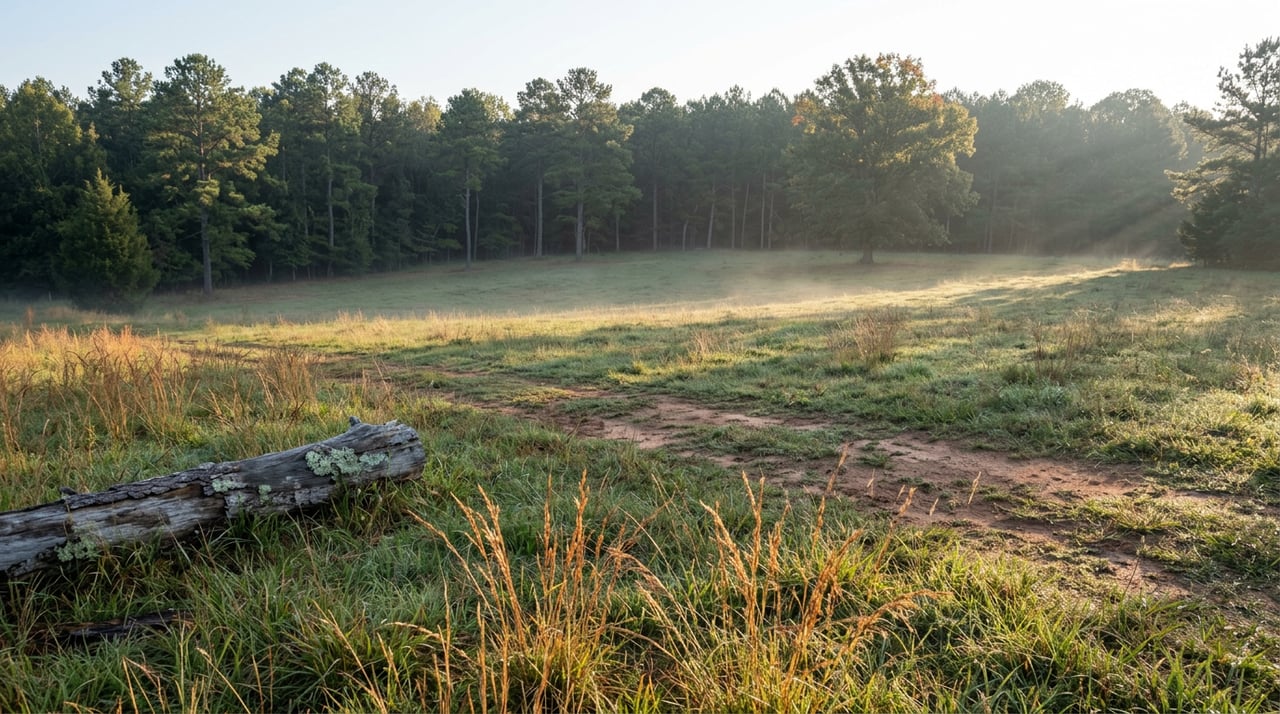
It's the question almost nobody asks when they're looking at raw acreage near Lineville, because the tax number on the listing sheet looks so reassuring. Timbered acres, working pasture, an annual bill low enough that a buyer barely factors it into the monthly math before moving on to the survey and the well.
Here is the part that catches people at the closing table instead of before it: that low number is not a property tax rate attached to the land. It is a classification attached to the previous owner's paperwork, and in Alabama, paperwork does not transfer with a deed.
The Bill on the Listing Is a Snapshot, Not a Promise
Alabama has taxed qualifying farmland and timberland at "current use" value instead of market value since 1978. The idea, sometimes called the greenbelt law, is straightforward: a working timber tract shouldn't be taxed as if it were already a subdivision. Clay County Revenue, which covers Lineville, spells out the qualifying threshold plainly: owners of five acres or more of farmland, pastureland, or timberland producing agricultural products, livestock, or wood products can apply to have that acreage assessed at less than market value.
The gap between the two numbers is not small. The Alabama Association of County Commissioners uses a hypothetical to show how wide it can run for timberland sitting near development pressure:
| Market value assessment | Current use assessment | |
|---|---|---|
| Appraised value | $30,000/acre | $762/acre |
| Assessed value | $6,000 (20%) | $76.20 (10%) |
| Tax on 50 acres | $12,300/year | $156.21/year |
That's not a typo. Same fifty acres, same soil, roughly a 79-fold difference in the annual bill, depending entirely on which value the county is allowed to use. This particular hypothetical is built around land near a growing area, and that detail matters more than it looks: current use value ignores what the land might become and taxes it only on what it's producing right now. The farther a parcel sits from that gap between "producing timber" and "buildable lot," the more current use has to offer, and the more a buyer stands to lose by assuming it just carries over.
Why the Bill Doesn't Follow the Deed
Current use is not a feature of the land. It's an election the owner makes, and Alabama law treats every change in ownership as a reason to check it again. Clay County Revenue states this directly: once current use has been granted, the owner doesn't have to reapply for subsequent years, but if the property changes hands by deed or will, the new owner has to file an application for current use. Skip that step and the county has no obligation to keep taxing the parcel at the lower rate. It defaults back to fair market value.
The filing window is narrow and it opens soon. The Alabama Department of Revenue's statewide guidance runs the application period from October 1 through January 1 of the following year, and Clay County's own page tells buyers not to wait past December 31 if they want the classification to apply to the coming tax year. For anyone closing on acreage near Lineville this fall, that means the paperwork clock starts almost immediately after the deed records, not at some later renewal date down the road.
This is the piece a purchase agreement rarely spells out and a portal listing never mentions. The tax figure a seller shows a buyer is real, but it belongs to the seller's filing, not to the parcel itself.
The Rollback Nobody Mentions at the Table
There's a second layer to this that matters even more if the buyer's plan is to eventually build. Alabama Code Section 40-7-25.3 lays out what happens when land under current use gets converted to a use that no longer qualifies, clearing for a house pad, subdividing for development, or otherwise taking the acreage out of active farm or timber production. When that conversion happens, the county doesn't just start taxing the new use going forward. It goes back and recalculates what should have been paid at market value for up to three preceding tax years, using whichever is higher between the sale price and market value, then bills the difference.
In plain terms: buy fifty acres that qualified for current use, hold it a couple of years while paying the low rate, then clear five acres to put up a home, and the county can reach back and collect three years of the gap between what was paid and what market value would have required. On a parcel where the annual difference runs into the thousands, that rollback bill isn't pocket change.
What This Means If You're Shopping Land Near Lineville
None of this is a reason to avoid buying acreage in Clay County. It's a reason to ask three specific questions before signing anything, not after.
- Is the parcel currently assessed under current use, and can the seller produce the filed application, not just the tax bill?
- What has the land actually been used for, and does that use still qualify once ownership changes?
- If there's any chance of building within the next few years, has anyone modeled what the rollback exposure looks like on this specific acreage?
That last question is worth sitting with. A buyer planning to build a home eventually is not doing anything wrong by buying land under current use, but they should know the clock on rollback taxes starts running from the date of conversion, not the date of purchase, and that three years of back taxes calculated at market value can turn a bargain parcel into a much more expensive one than the listing implied.
Questions Worth Asking the County Before You Close
Does the current use classification automatically carry over from the previous owner? No. Both Clay County Revenue and the Alabama Department of Revenue are explicit that a change in ownership requires a new application. The classification stays with the filing, not the parcel.
What's the deadline to file after closing? The statewide window runs October 1 through January 1, and Clay County's guidance points buyers toward filing by December 31 to have the lower assessment apply to the following tax year. Miss that window and the parcel reverts to market value assessment until the paperwork is filed.
Does clearing part of the land for a homesite trigger the full rollback? The statute applies when property valued at current use is converted to a use that no longer qualifies. Building a residence on acreage that was taxed as producing timber or farmland is the kind of conversion the rollback provision is written to catch, and the recalculation can reach back three years.
Land near Lineville still offers real value for buyers who understand how the tax math actually works, not just what the current bill says. That's the kind of detail that separates a smooth closing from a surprise one, and it's exactly the sort of local mechanic Bill Coats walks buyers through before an offer ever goes in, not after. If you're weighing acreage in Clay or Randolph County and want to know what a specific parcel's tax picture actually looks like, schedule a free consultation and we'll go through it together.