On Lake Wedowee, buying waterfront doesn't automatically buy you a dock. Alabama Power owns the lakebed and holds shoreline rights across the reservoir under a federal license, and that ownership sits underneath every closing on the water whether the closing attorney mentions it or not.
This isn't theoretical. It's written into Alabama Power's own shoreline permitting rules, it shows up in every serious buyer's guide to the lake, and it matters more right now than it has in decades, because the federal license governing the whole system is in the middle of its first rewrite since the dam went into service.
What "Waterfront" Actually Means on a Reservoir
Lake Wedowee isn't a natural lake. It's R.L. Harris Reservoir, formed when Alabama Power dammed the Tallapoosa River and put the project into service in April 1983, operating under a federal license the Federal Power Commission first issued back in December 1973. Alabama Power owns the pool property itself, plus additional property rights along the shoreline, all authorized through what's now designated FERC Project No. 2628.
Buyers coming from natural lakes or coastlines tend to picture ownership the way they would a beach house: the water laps up to a private line, and everything on the dry side of that line belongs to whoever holds the deed. On Lake Wedowee, that mental model breaks down the moment you step past your setback. Alabama Power's own residential shoreline guidelines put it in language that leaves no room for interpretation:
"the Permittee has no property rights that extend into the lake, as Alabama Power owns in fee this property."
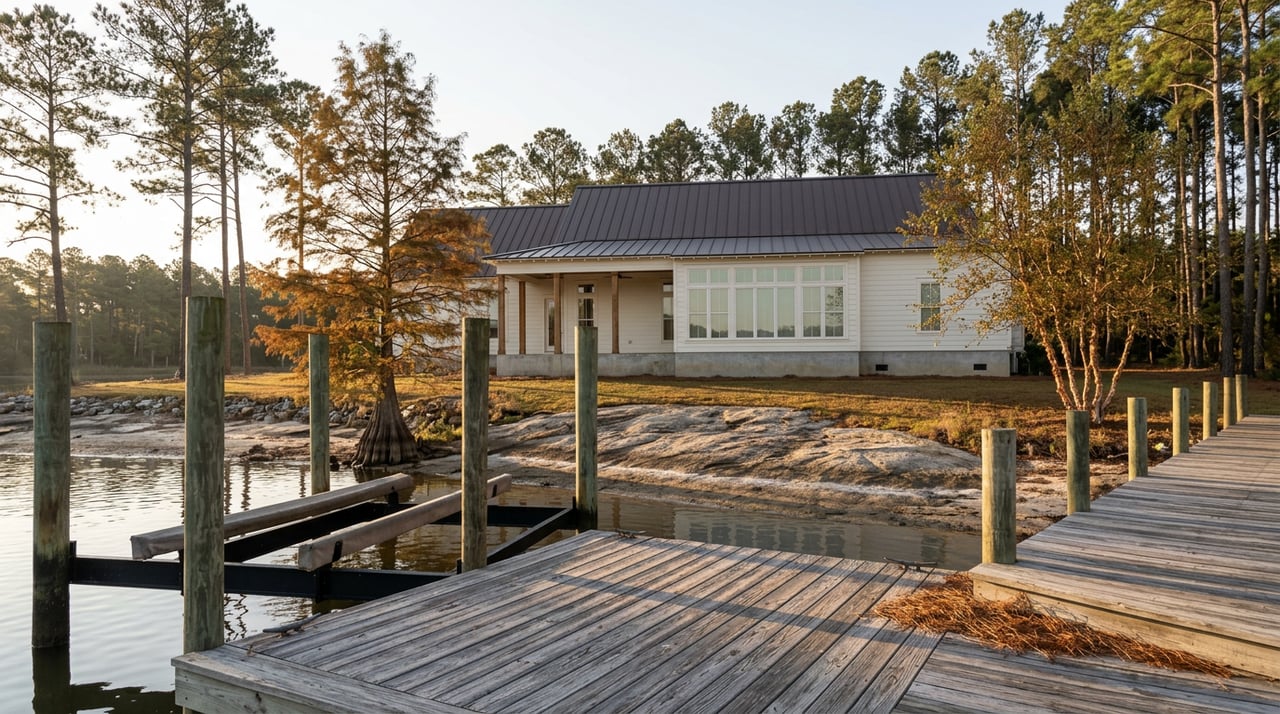
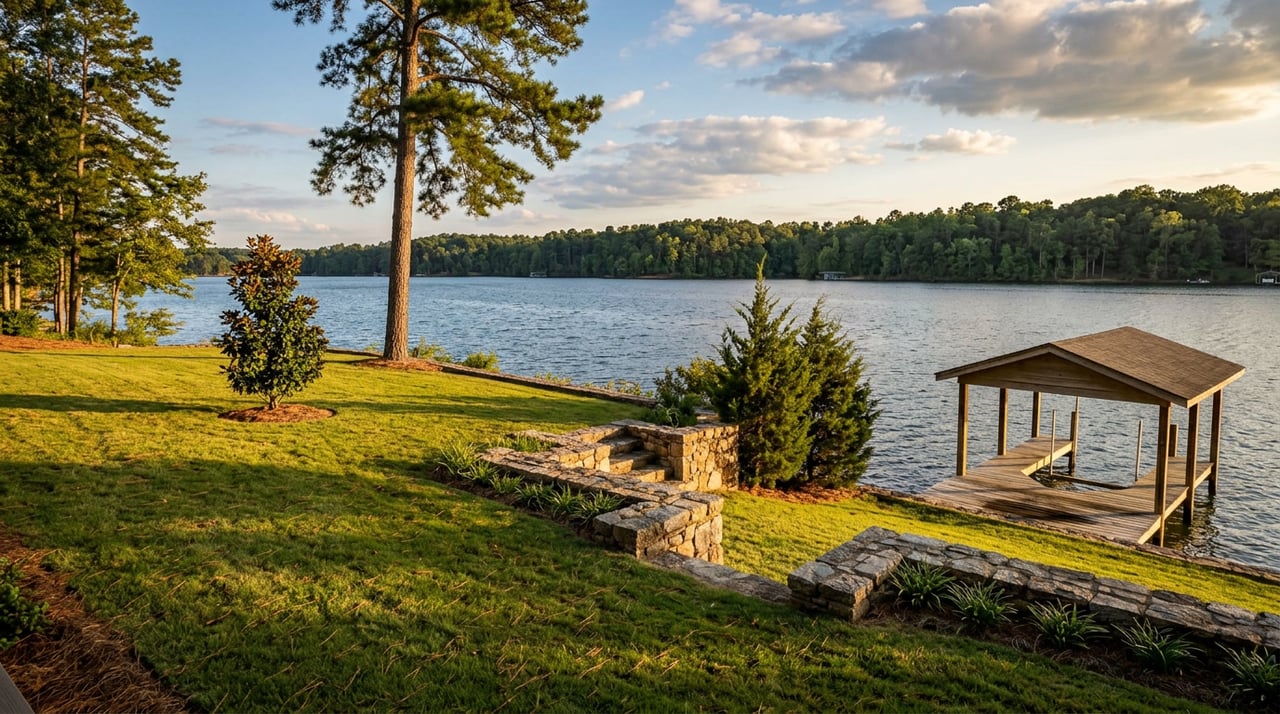
That sentence is why a listing that reads "waterfront" or "year-round water" is describing a view, not a permit. The dock, the boathouse, the boat ramp, even a seawall, all require separate approval from Alabama Power's Shoreline Management office before anyone can build, rebuild, or in some cases repair them.
The Permit Is the Asset. The Deed Is Just the Address.
Alabama Power's guidelines set specific limits on what a homeowner can put on the water, and the numbers matter because they cap what a buyer is actually purchasing when a listing advertises a dock.
| Structure | Typical limit |
|---|---|
| Total shoreline structures | Up to 1,220 square feet, split between 964 over water and 256 over land |
| Maximum structure length | 50 feet |
| Personal watercraft floats | Up to two allowed without counting against square footage; a third counts against the cap |
| Pier platform area | Around 420 square feet in some locally published summaries |
| Boathouse or wet slip | Around 800 square feet in some locally published summaries |
The overall footage cap and the length limit come straight from Alabama Power's official residential shoreline permitting guidelines. The narrower per-structure numbers for piers and boathouses show up in locally published summaries of those same rules, and they don't always match the official document exactly, which is itself worth noting. Alabama Power reserves the right to modify these guidelines at its discretion, and the version circulating in a local magazine or a realtor's info sheet may lag the current PDF. The only number that actually protects a buyer is the one written into that specific property's permit, confirmed directly with the Shoreline Management office at P.O. Box 488 in Wedowee.
The Question That Actually Matters at Closing
A dock that's been sitting in a cove for twenty years usually has a permit attached to it somewhere. "Usually" is not a word anyone wants near a signature on a lake house contract. Buyer guides for the lake are direct about this: dock licenses transfer at sale often, not automatically, and the transfer can carry its own paperwork and fees. That means the question isn't just whether a dock exists. It's whether the permit attached to it is currently valid, and whether it moves to the new owner cleanly or requires a fresh application before the closing table.
If a structure was never permitted at all, or has been modified beyond what its original permit covered, Alabama Power can treat it as noncompliant. The guidelines even carve out a specific category for unenclosed legacy structures, older docks and boathouses that predate current rules and get handled differently than a brand-new permit application. That category exists precisely because so many structures on a reservoir this age were built before anyone thought to ask permission. Sorting out which bucket a given dock falls into, and what it would take to bring it current, runs through the same Shoreline Management office that issues new permits.
Why the Timing Makes This More Urgent, Not Less
Under normal circumstances, this would be background information worth a footnote. Right now it isn't settled.
Harris Dam's original federal license was issued in 1973. The relicensing process, the first this project has ever gone through, cleared a major milestone when FERC issued a Final Environmental Impact Statement in April 2025, and as of last fall the process was still working its way through final review. Whatever license eventually replaces the original one is expected to run another 30 to 50 years. That means the shoreline rules a buyer signs onto at closing could still be settling into final form well into the new owner's time on the lake.
None of that should scare anyone away from the water. Alabama Power has managed permitted structures on Harris Reservoir since it filled in 1983, and the shoreline program exists specifically to keep that process orderly as conditions and rules shift. But it's a reason to ask more questions on a dock-dependent property this year, not fewer, and to treat the permit as something verified in writing rather than assumed to come with the view.
The people who build docks for a living see this system from the inside every day. Jeremy Lipham, owner of Lake Wedowee Docks, has lived on the lake his whole life and runs his entire business through Alabama Power's permitting process, from new construction to repairs and boat lifts. For him it's routine paperwork. For a buyer closing on a lake house once, it's easy to miss until the sale is already under contract.
What to Confirm Before You Write, or Accept, an Offer
- Get the dock's Alabama Power permit number and current status in writing, not secondhand from the seller or listing agent
- Ask directly whether the permit transfers automatically at sale or requires a new application and fee
- Have the existing structure's dimensions checked against what its specific permit actually allows
- Ask whether any part of the dock qualifies as an unenclosed legacy structure, which carries different rules than a newly issued permit
- Order a current survey showing the shoreline line, any Alabama Power easement, and the project boundary
- If you're selling, gather every shoreline permit and piece of Alabama Power correspondence before the property goes on the market, not after an offer comes in
A Few Questions Worth Asking Directly
Does a dock permit transfer automatically when I buy a home on Lake Wedowee? Not automatically in every case. Transfer steps and fees can apply, so verify directly with Alabama Power's Shoreline Management office before you close rather than assuming the paperwork follows the deed.
What happens if a dock on the property was never permitted? It's treated as noncompliant, and Alabama Power can require it be brought into compliance or removed. That's a conversation worth having before you write an offer, not after you own the problem.
Will the ongoing relicensing change what I can build? It's possible. FERC's Final EIS for the Harris Project came out in April 2025, and the eventual new license may run 30 to 50 years, so shoreline rules on this lake are worth revisiting periodically rather than treated as fixed forever at closing.
Living on the water changes how you read a listing. Bill Coats has spent decades on Lake Wedowee, showing property by boat and walking buyers and sellers through exactly this kind of shoreline detail before it becomes a closing-day surprise. If you're weighing a waterfront purchase or getting ready to sell one, schedule a free consultation and get the permit picture sorted out before you're under contract, not after.