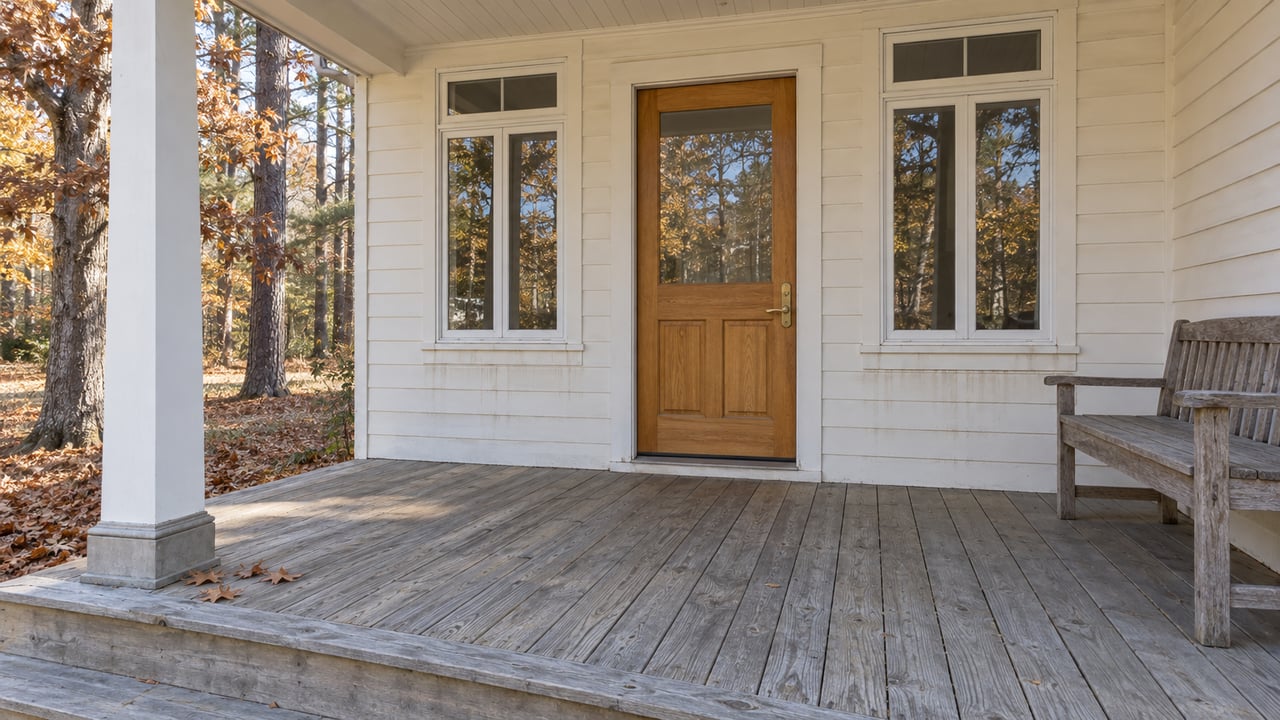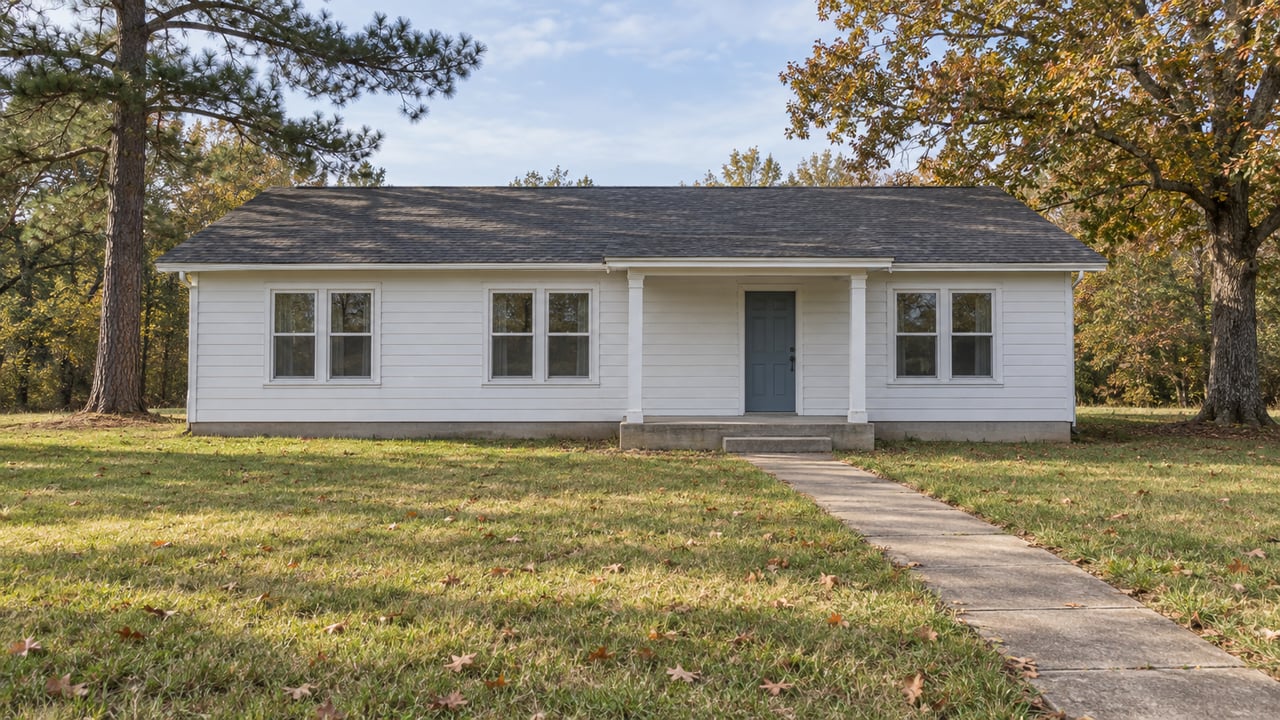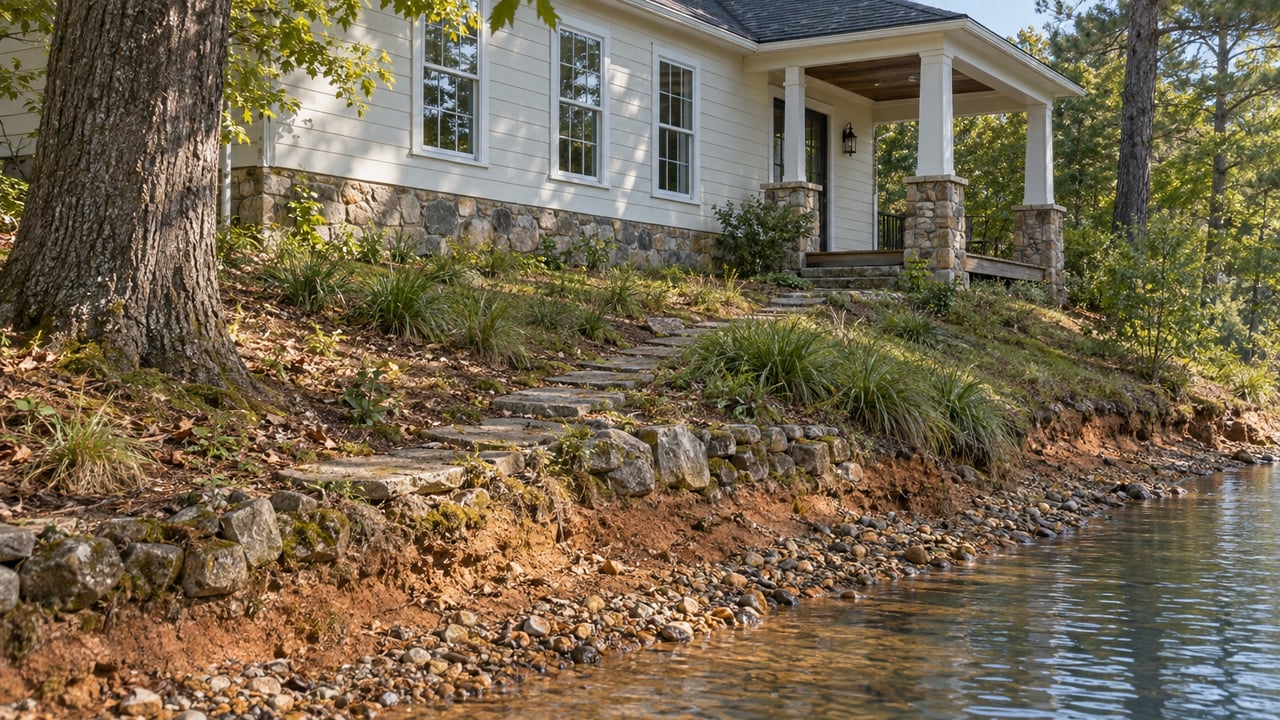
Tour a Lake Wedowee listing in July and the dock sits in eight feet of clear water, the yard runs flat to a stone seawall, and the photos on the listing sheet look exactly like the view in front of you. Come back to the same address in January and the dock may be resting on mud, the seawall may sit ten feet from the waterline, and the listing photos suddenly read like they were taken on a different lake.
They weren't. They were taken at full pool, which is only half the story on this reservoir.
Lake Wedowee, officially the R.L. Harris Reservoir, isn't a lake that holds a constant level year round. It's a storage reservoir, built and operated under a license from the Federal Energy Regulatory Commission, and that license requires Alabama Power to draw the lake down every fall to create flood storage capacity for winter and spring rains. The drop is real, it's regulatory, and it's the single biggest thing a comparison shopper misses when two listings show the same price and the same shoreline footage.
Why This Lake Behaves Differently Than a River
Alabama Power operates two kinds of reservoirs on its river systems. Run of river lakes, like Yates and Thurlow on the Tallapoosa, discharge roughly the same volume they take in and hold a fairly consistent level all year. Harris is not one of those. It's a storage project, grouped with Weiss, Neely Henry, and Logan Martin, meaning it's built to bank water in the summer and release it strategically through the winter.
That distinction is written into the FERC license itself. Every fall, Alabama Power lowers Harris under a plan called the guide curve, starting the drawdown around October 1 and typically wrapping up by late November. The lake stays at that lower winter elevation through the cold months, then the company allows it to refill toward full pool as spring rains arrive, so it's back to summer level in time for the recreation season.
The drop at Harris runs about eight feet. That's not a rounding error on a lake with an average depth of 40 feet. It's the difference between a dock that floats all winter and a dock that doesn't.
The Eight Feet, In Context
Full summer pool at Lake Wedowee sits at 793 feet above sea level. Winter pool sits roughly eight feet lower, close to 785 feet, the same minimum guide curve elevation the reservoir was built to reach before its first full impoundment back in 1983. Here's what those numbers mean on the ground:
| Condition | Elevation | What a buyer sees |
|---|---|---|
| Full summer pool | 793 feet | Docks float, coves match the listing photos |
| Winter pool | roughly 785 feet | Water drops about 8 feet, shallow coves and upper creek arms can expose mud flats and rock |
| Flood pool ceiling | 795 feet | Only 2 feet above summer pool, a tighter buffer than many storage lakes carry |
This is what a listing means when it advertises "year round water." It isn't a marketing flourish. It's a specific claim that a given lot retains enough depth at winter pool, roughly eight feet below where the photos were taken, to keep a dock usable through the cold months rather than sitting on exposed lakebed until spring refill.
Deep, protected coves tend to hold that depth. Wadeeta Cove, Ginhouse Cove, Ratley Cove, and Crystal Cove all sit in the kind of terrain, steep banks, main channel proximity, that keeps water over the mud even after eight feet come off the top. Fox Creek and Tranquility, both on the south end where the lake runs deeper near the dam, carry the same reputation. Lots tucked far up a creek arm or sitting in a wide, shallow cove don't have that luxury. They can look identical to a deep cove lot in a July photo and behave completely differently in December.
None of this shows up in a listing's headline price or its stated frontage. Two lots can carry the same asking price and the same 150 feet of shoreline and still be different assets, because one of them keeps its water and the other one doesn't.
A Two Foot Buffer, and a Different Question Entirely
There's a second number worth knowing, and it answers a different question than the drawdown does. Harris's flood pool ceiling sits at 795 feet, just two feet above the 793 foot summer pool. That's a notably tight margin. Many storage lakes carry flood easements of four, six, or even eight feet above their normal pool, which means a heavy rain event can push water up onto docks and boathouses that were built assuming a stable shoreline. Harris was engineered with less room to spare in that direction, which limits how far the lake can rise above summer pool before flood operations kick in.
That's a flood risk question. It has nothing to do with the eight foot winter drawdown. A buyer who confirms the flood buffer and stops there hasn't actually confirmed whether their dock will float in January. Those are two separate facts about the same lake, and a listing sheet won't distinguish them for you.
To see how much a shoreline can actually change between the two pools, look at Great Sky RV Park on the lake's northeast section. The property advertises roughly 700 feet of lake frontage in summer and approximately 600 feet of dockable water in winter, a hundred feet of usable shoreline that simply isn't there for five months of the year. A residential lot with less overall footage feels that same proportional loss, just on a smaller scale, and it's the reason a lot's frontage number alone can't tell you what you're buying.
What To Verify Before You Write an Offer
A handful of checks separate a lot that holds its value from one that only looks good in the listing photos.
- Ask for photos or a walkthrough at winter pool, not just the staged summer shots on the listing sheet.
- Confirm whether the dock is a floating structure or a fixed one, since a floating dock rides down with the drawdown while a fixed structure may end up stranded above the waterline.
- Check the lot's shoreline footage against Alabama Power's permitting rules, since lots with less than 100 feet of shoreline can face restrictions on what kind of dock structure they're even eligible to build.
- If the listing calls the water "year round," ask the agent directly what the depth reads at winter pool, not just at full pool.
None of these questions show up on a standard listing sheet, and none of them are answered by the asking price.
Two Questions Worth a Straight Answer
Does the drawdown happen the same way every year? The general pattern, an October start and a wrap-up by late November, follows the FERC guide curve and repeats annually. The exact timing can shift by a few weeks depending on rainfall and reservoir conditions that fall, since Alabama Power adjusts the pace within the bounds the license allows.
Is a shallow cove lot a bad purchase? Not necessarily. Plenty of owners are happy with a lot that loses depth in winter if they mainly use the lake between May and September. The problem isn't the lot itself. It's buying one without knowing which kind you're getting, since the price alone won't tell you.
If you're comparing waterfront listings on Lake Wedowee and want to know which pool a specific address actually holds through the winter, Bill Coats can walk the shoreline with you and check it against what the permit and the guide curve actually allow. Schedule a free consultation before you write an offer on a lot you've only seen at full pool.
This article is general information, not legal, tax or financial advice. Consult a qualified professional about your situation.